
Destination: Europe
Old Guidebook, New Life
by Doug Mack | 04.02.12 | 10:52 AM ET

In an excerpt from "Europe on 5 Wrong Turns a Day," Doug Mack envisions a new future for himself in a vintage guidebook
 Email to friend
 del.icio.us
 Digg
Digg Facebook
 Furl
Furl Ma.gnolia
 Mixx
Mixx Reddit
 StumbleUpon
 Yahoo! Buzz
Interview with Doug Mack: ‘Europe on 5 Wrong Turns a Day’
by Leif Pettersen | 04.02.12 | 10:50 AM ET
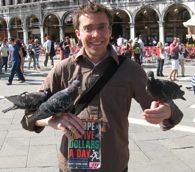
Leif Pettersen talks to the author about his new book, travel snobbery, and traveling with "Europe on Five Dollars a Day"
The Official Kickstarter Page for Greece
by Jim Benning | 03.01.12 | 12:06 PM ET
If anyone could use some Kickstarter funding right now, it’s probably Greece.
From McSweeney’s: Welcome to the Official Kickstarter Page for Greece.
Greece is a small country in the south of Europe known for inventing democracy and western philosophy and for its national motto, “Release the Kraken!” Our shores are a popular destination for backpackers and tourists wishing to relax amid sun-drenched beaches by day and intoxicated British tourists by night.
We wish to continue this good work, but to do so our creditors are demanding €14.5 billion ($18.6 billion) by March 20. We do not have this money, nor do we think we can raise it in time: Our asset sales have gone nowhere, and the EU has nixed our plan to close shop and re-open a few blocks away as “Greeze”. And so we come to you, our friends, for help.
‘Downton Abbey’ and the Art of the English Library
by Jim Benning | 02.02.12 | 3:17 AM ET
Like so many people, I’ve been glued to PBS’ “Downton Abbey” and the scheming and backstabbing unfolding in Highclere Castle. Here, series creator Julian Fellowes discusses his favorite room in the castle: the library. I love his take on it. The French have their drawing rooms. The Austrians have their ballrooms. Libraries, he says, are the rooms the English get right.
Watch Downton Abbey: Julian Fellowes on a Favorite Room at Highclere on PBS. See more from Masterpiece.
A Street Corner in Paris
by Jeffrey Tayler | 01.30.12 | 11:22 AM ET
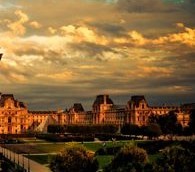
Jeffrey Tayler had all but given up on the City of Light. Then he sat down at a Left Bank cafe.
R.I.P. George Whitman, Shakespeare & Company Owner
by Jim Benning | 12.15.11 | 12:25 PM ET
It’s hard to imagine Paris without Shakespeare & Company, and George Whitman, who died yesterday at the age of 98, owned the famed Left Bank bookstore for years.
He took its name from the original shop owned by Sylvia Beach.
“For decades,” the New York Times notes, “Mr. Whitman provided food and makeshift beds to young aspiring novelists or writing nomads, often letting them spend a night, a week, or even months living among the crowded shelves and alcoves.”
Travel writer Erin Byrne profiled Whitman several years ago, noting that he had “fashioned a life for himself that brings together the two things he loves most in all the world, books and people. It is this combination that makes him tick. Old age without loneliness is unusual; George always has a house full of friends. Fragility without weakness is seldom seen; this man is thin and frail, but his presence is noble.”
His daughter, Sylvia, discusses her father and the store’s history in this terrific video:
Interview with Henry Rollins: Punk Rock World Traveler
by Jim Benning | 11.02.11 | 12:40 PM ET
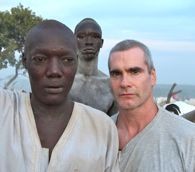
Jim Benning asks the musician about his new book of photographs and how travel has humbled him
The Not-So-Endless Summer
by Abbie Kozolchyk | 10.03.11 | 12:24 PM ET
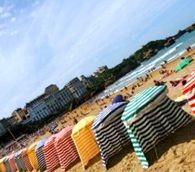 Biarritz, France (Abbie Kozolchyk)
 Parting with beach season is especially sweet sorrow in Biarritz, France, as Abbie Kozolchyk discovered
See the full audio slideshow: »
Greek Paradise, Lost
by Dan Saltzstein | 09.21.11 | 11:56 AM ET
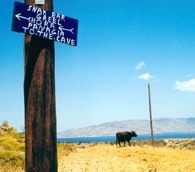 Photo: Dan Saltzstein
 In the Aegean isles, Dan Saltzstein went in search of a mysterious cave. He found it -- and a dose of danger.
R.I.P. Notting Hill’s Travel Bookshop
by Jim Benning | 09.09.11 | 1:03 PM ET
Despite a last-minute campaign by editors and even celebrities, London’s Travel Bookshop has closed.
USA Today’s Laura Bly received an email from the founder yesterday: “The shop is currently closed—but I am going to open it and be there myself this Saturday 10th - for a final day’s sale. Then sadly, that’s it for the Travel Bookshop.”
The store was featured in the 1999 Hugh Grant movie “Notting Hill.” As we noted recently, Alec Baldwin, who appeared in the film, was among those Tweeting his support for efforts to find a buyer.
Travel Movie Watch: ‘The Loneliest Planet’
by Eva Holland | 08.17.11 | 7:01 AM ET
The Loneliest Planet premiered at the Locarno Film Festival last week. It’s an adaptation of a travel-themed short story, “Expensive Trips Nowhere,” by World Hum contributor Tom Bissell, and it stars Gael Garcia Bernal of “The Motorcycle Diaries” fame. The story follows a pair of young backpackers on a guided hiking expedition in the Caucasus Mountains, and judging from this Variety review, it’s a must-see:
Much of the pic’s first hour unspools through continuous handheld shots of the threesome trudging along with backpacks, telling stories when they’re not silently concentrating on navigating treacherous terrain. At regular interludes, long-distance shots observe them dwarfed by the landscape as Richard Skelton’s haunting, rhythmic, ethnically inflected score intones in the background.
An encounter on the trail turns into a near-life-threatening test of manhood that Alex [Bernal] arguably fails. Thereafter, none of the characters discuss what happened, but it casts a profound pall over the adventure, shifting allegiances and sympathies among the threesome. ...[V]iewers may recognize a core emotional truth about how deeply travel tests relationships, how a single instinctive action can shift the ground irrevocably between people, and how no words can make things right.
Bad ‘Carma’
by David Farley | 08.11.11 | 12:43 AM ET

David Farley wanted to drive only occasionally during his stay in Italy. So why did something always go wrong?
Meet Heathrow Airport’s New Writer in Residence
by Eva Holland | 08.02.11 | 2:58 PM ET
Novelist Tony Parsons is the latest writer to sign up for a week at Heathrow. According to the Evening Standard, Parsons will “roam around the airport, among passengers and staff, as inspiration for his 13th book which will be a collection of short stories based on his experiences there.”
“The Art of Travel” author Alain de Botton was the airport’s first writer-in-residence back in 2009. We interviewed him about the experience.
(Via @johnleewriter)
The ‘I Ate at El Bulli’ Genre of Food Writing
by Jim Benning | 08.01.11 | 11:40 AM ET
Famed Spanish restaurant El Bulli closed Saturday. Among its many legacies, the Telegraph notes, it created a new genre in food writing:
Over the years, however, hundreds of restaurant critics from all over the world made the pilgrimage to northern Spain, establishing a distinct genre of review that has become known in the trade as the “I Ate At El Bulli Piece” (IAAEBP).
A pioneering example appeared in the New York Times Magazine: “Welcoming cocktails of a frozen whisky sour and a foam mojito were accompanied by popcorn that had been powdered and reconstituted as kernels, and a tempura of rose petals. A ‘Kellogg’s paella’ consisted of puffed Rice Krispies to which the waiter added an intense seafood reduction; on the side were a small, flash-fried shrimp, a piece of shrimp sashimi and an ampoule containing a thick brown extract of shrimp heads that you were instructed to squeeze into your mouth.”
Anthony Bourdain’s April blog post about his El Bulli meal would have to stand as a masterful example of an IAAEBP.
Tonight: Bourdain Goes to El Bulli for ‘Greatest Meal’ of His Life
by Jim Benning | 08.01.11 | 11:05 AM ET
The Spanish restaurant many critics considered to be the best in the world served its final meal Saturday night. Travel Channel host Anthony Bourdain visited Ferran Adria’s El Bulli recently, and his show about it airs for the first time tonight.
Bourdain called the meal he had there during that visit “the single greatest restaurant meal of my life.”
I don’t know if Monday’s episode is the best depiction of what the Adrias did at El Bulli-though I’m pretty damn sure it is. I do know that our producers and camera people and editors and post production people went all out-did their very best work. This show was a labor of love and much gratitude. We were determined to get it right.