
Destination: Japan
What’s More Interesting, Writing About Science or Travel?
by Jim Benning | 03.18.05 | 5:53 PM ET
That was just one of the questions posed to Bill Bryson by Guardian newspaper readers recently. How did the author of a book about hiking the Appalachian Trail respond? “The thing I really enjoy about my existence, my work, is the variety of it. I did a science book as a break from travel writing, but I’d be happy at some point to go back to it - or equally to go off and doing something else entirely. I really enjoy going to a library and spending the day doing research - to me that was the most pleasurable part of the science book. So - not writing the same kind of book over and over again is to me the real pleasure of what I do.” Also: Bryson told the BBC he’s working on a memoir about growing up in the 1950s and a biography of William Shakespeare, and that he’d like to do more travel writing, perhaps about Japan and the Far East.
 Email to friend
 del.icio.us
 Digg
Digg Facebook
 Furl
Furl Ma.gnolia
 Mixx
Mixx Reddit
 StumbleUpon
 Yahoo! Buzz
Carey in Japan
by Michael Yessis | 12.13.04 | 5:40 PM ET
Australian novelist Peter Carey’s next book focuses on a trip to Japan he took with his 12-year-old son Charlie. Their mission: to explore the worlds of manga and anime. Travel + Leisure’s Amy Farley quizzes him about his trip in the December issue. “Wrong in Japan,” the book about the trip, comes out next month.
“Tokyo on One Cliche a Day”
by Michael Yessis | 10.20.03 | 9:01 PM ET
Oh, those wacky Japanese. They eat whale meat. They love comic books. They sleep off their sake buzz in hotel rooms the size of refrigerators. And they host loads of Western writers who love to write about such wacky things. The latest is Seth Stevenson, who recently filed a week’s worth of dispatches from Tokyo for Slate’s Well-Traveled feature. No deeper cultural insights here. Just some corny laughs. “[I]f you’re still hung up on the whale, you should know that you can get horse sashimi here,” Stevenson writes. “I have not eaten horse sashimi, but if I do, I am planning this exchange: I take a bite of horse, cough, clear throat, cough. Companion: ‘Something wrong with your throat?’ Me: ‘Just a little horse.’”
Yazuka 101
by Jim Benning | 04.28.03 | 3:27 PM ET
Say you move to Japan or spend a few months visiting. How would you know if your neighbor was a member of the Japanese mafia, a shady character committing all manner of violent acts, even taking giant bowls of steaming udon noodles without paying for them? Thankfully, Amy Chavez explains the basics in the Japan Times. She speaks from experience, having recently discovered that her neighbors fit the profile. “Does your neighbor take part in nocturnal motorcycle revving?” she writes. “This is a favorite activity of the bosozoku, many of whom go on to join the ranks of yakuza or other organized crime groups.” Or how about this one: “Does your neighbor call any of his friends ‘aniki,’ the term used to refer to a senior gang member?” If so, be afraid. Be very afraid.
Pico Iyer: Parasite?
by Jim Benning | 01.29.03 | 10:45 AM ET
Apparently so. The travel writer and novelist might be admired in the West, but in Japan, where he lives, Iyer’s neighbors call him “Isoro,” or parasite. Why? Because when the rest of the men get up and go to work in the morning, Iyer stays home to write. That gem is but one revelation in a profile of Iyer in Sunday’s Los Angeles Times.
‘Anne of Green Gables’ Big In Japan
by Michael Yessis | 11.15.02 | 12:29 AM ET
About 50 years ago, Hanako Muraoka translated the book “Anne of Green Gables” by Canadian author L.M. Montgomery into Japanese. “It was a good book and she
was a good translator, but no one could imagine what would happen next,” writes Cleo Paskal in a recent edition of Canada’s National Post. “Half-a-century later, Akage no An (Anne with Red Hair) has become a rol model—no, an icon—for countless Japanese…The books sell well, Japanese tourists flock to Prince Edward Island, and earnest young folk try to live life as Anne would have.”
Paskal’s piece explores the travel scene inspired by the book, including the theme park in Hokkaido, Canadian World.
Power Trip
by Emily Maloney | 09.03.02 | 10:58 PM ET
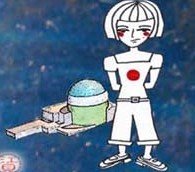 Art by Emily Maloney.
 Grab your 3-D glasses! Pin that name tag to your jacket! Now get on the bus with American art student Emily Maloney for a class excursion to a Japanese nuclear plant.
World Cup: “Travel Through Sport”
by Michael Yessis | 06.18.02 | 12:46 AM ET
If it’s Monday, it must be time for another batch of World Cup-themed stories. South Florida Sun-Sentinel travel editor Thomas Swick leads off with a sweet, short essay on the event’s ability to bring people together, despite national grudges and bad haircuts. “When else can you see Americans (some of us, anyway) taking an interest in Turkey and Costa Rica?” he writes. “At what other time do you find Norwegians cheering on Senegalese; Chileans admiring, reluctantly, the artistry of Argentinians?” On ESPN.com, Englishman Michael Davies has been keeping a daily diary of his travels through Japan and Korea while covering the games—and, sometimes, Japan’s ubiquitous vending machines. “Do you like vending machines? I love them,” he writes. “Everything tastes better out of a vending machine. The whole transaction is just so damn enjoyable, like winning something at the fair.”
Love Hotels Welcome World Cup Visitors
by Jim Benning | 05.21.02 | 7:55 PM ET
The Honeymoon Park Inn, the Eros Motel and the Valentine Motel will welcome soccer fans arriving in South Korea next week for the World Cup—but not because the hotels’ owners necessarily want to. These “love hotels” and many others—so named because they usually house couples in search of a little privacy and some funky erotic art—are being commissioned by tourism authorities to play host because South Korea simply doesn’t have enough hotel beds to house the 650,000 visitors expected. The hotels often rent the same room five times a day. Not so during the World Cup, so they’ll likely lose money. To add insult to injury, owners are also being asked to change out some of their rooms’ more risque art. “They don’t want the places to be vulgar,” Lee Jung Yeon, manager of the Romance Inn, told the Los Angeles Times. Vulgarity? They’re worried about vulgarity? They obviously haven’t spent much time with many soccer fans.
“This is the Essence of Travel, I Reminded Myself: Meeting Someone New, Seeing Something New”
by Michael Yessis | 05.20.02 | 8:04 PM ET
Alison Buckholtz often thought of travel as a way to gain access to exotic objects, which she would then purchase and take home as souvenirs. But when the rare bamboo basket she craved during a trip to Japan wasn’t for sale at any price, even for a stash of Budweiser, she was forced to rethink her narrow-minded notions of travel. Buckholtz writes in the New York Times: “[T]he act of travel itself grants us true access, the ultimate gift from host to guest, and it is more precious and transportable than any basket.”
The Pokemon Hegemon
by Michael Yessis | 05.08.02 | 10:28 PM ET
The United States isn’t the only reigning cultural superpower in the world these days. Japan is rising. In the May/June issue of Foreign Policy, Douglas McGray offers a thoughtful, detailed examination of how Japan is exerting growing cultural influence across the globe. He looks at a range of influences, from Pokemon and anime to Hello Kitty and the “Super Flat” art movement. “Millions of teenagers in Hong Kong, Seoul, and Bangkok covet the latest fashions from Tokyo, most of which never make it to New York,” McGray writes. “Japanese lifestyle magazines, some of the most lavishly produced in the world, are smuggled by illegal distributors across Asia as soon as they are on newsstands in Tokyo, though none has launched an American edition. At the same time, Japan has made deep inroads into American culture, usually written off by the rest of the world as aggravatingly insular.”
“We Plan to Develop Canned Dog-Meat Juice, Which Football Fans Can Enjoy in Their Stadium Seats”
by Michael Yessis | 05.07.02 | 10:30 PM ET
We’re a couple of the rare Americans who can’t wait for World Cup South Korea/Japan 2002. Many of the games will begin at 4 a.m. where we live, but we don’t care. We’re watching—for the football, and the inevitable cultural confusion, enlightenment and head-butting that comes when fans and teams from 32 countries get together to fly their flags and chant their songs. With less than four weeks remaining before the Cup kicks off, the zaniness has already begun.
Acknowledging the Unacknowledged in Japan
by Jim Benning | 04.22.02 | 7:42 PM ET
While working in Japan, Peggy Orenstein suffered a miscarriage—something most Americans don’t like to talk about. But in Japan Orenstein found a culture far more open about such things. In Sunday’s New York Times Magazine, she explores the two countries’ differing views, and she recalls her visit to Zozo-ji, a Buddhist temple in Tokyo filled with small statues of infants.
Japanese Tourists Stumble into Israeli-Palestinian Conflict
by Jim Benning | 04.18.02 | 7:31 PM ET
It sounds like a spoof news story from The Onion, but this is legit: A pair of Japanese backpackers touring Bethlehem were so engrossed in their guidebooks they wandered right up to the Church of the Nativity, only to be shocked to learn it was the site of an ongoing seige between Israeli soldiers and Palestinian gunmen.
Home Alone
by Aaron Paulson | 04.18.02 | 1:40 AM ET
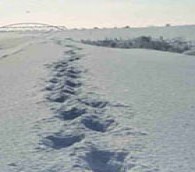 Photo by Aaron Paulson
 While his wife taught at the local middle school, Aaron Paulson worked at home. To his Japanese neighbors, that made him one of the girls.