
Tag: Architecture
The Burj Khalifa’s American Connection
by Eva Holland | 01.13.10 | 1:52 PM ET
Slate takes a look at the American architects who worked on the newly-opened skyscraper of skyscrapers, and the creative debt they owe to one of their American predecessors—Frank Lloyd Wright.
 Email to friend
 del.icio.us
 Digg
Digg Facebook
 Furl
Furl Ma.gnolia
 Mixx
Mixx Reddit
 StumbleUpon
 Yahoo! Buzz
76-Second Travel Show: Happy Birthday, Manhattan Bridge
by Robert Reid | 01.05.10 | 9:30 AM ET

Robert Reid throws a party, complete with commemorative booklets, for the venerable New York bridge
Five Photos: Burj Tower in Dubai, World’s Tallest Building
by World Hum | 01.04.10 | 4:09 PM ET
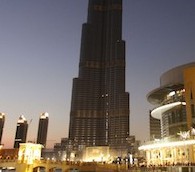 REUTERS/Ahmed Jadallah
 The Burj Khalifa just opened. At 2,717 feet, it casts a long shadow.
Video You Must See: The Bending of the Manhattan Bridge
by Michael Yessis | 12.10.09 | 12:17 PM ET
(Via Kottke)
Photos: The World’s Most Architecturally Interesting Subway Stations
by Michael Yessis | 12.09.09 | 11:02 AM ET

As compiled by designboom. The gallery includes shots from Stockholm, Bilbao, Shanghai and Munich (pictured), among others. (Via Coudal)
Photo You Must See: Walt Disney Concert Hall in Los Angeles
by World Hum | 10.27.09 | 11:43 AM ET
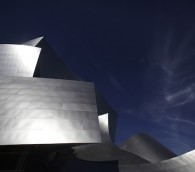 REUTERS/Lucy Nicholson
 A view of the Frank Gehry-designed Walt Disney Concert Hall in Los Angeles.
Athens: A New Look for an Old City
by Rick Steves | 10.20.09 | 11:37 AM ET

Exploring Europe, exploring travel as a political act
Behind the Eiffel Tower’s Beauty Regimen
by Eva Holland | 10.13.09 | 10:15 AM ET
As the120th birthday celebrations for the Paris landmark continue, EuroCheapo’s Theadora Brack shares “some riveting facts” (har) about the tower’s maintenance regimen.
Introducing the ‘Walkway Over the Hudson’
by Eva Holland | 10.02.09 | 2:28 PM ET
It seems pedestrian park-bridge hybrids are really catching on. After Manhattan’s High Line opened to rave reviews this summer, Poughkeepsie, NY, has followed up with its own offering, transforming a 1.25-mile railway bridge into a state park/walkway running more than 200 feet above the Hudson River. This Just In has the details on the grand opening.
What if the Burj Dubai was in Manhattan?
by Eva Holland | 09.24.09 | 4:26 PM ET
Kottke posts an altered version of the Midtown skyline. Puts things in perspective, doesn’t it?
Americans Fight Tourist Kitsch in China
by Michael Yessis | 09.09.09 | 11:00 AM ET
In China, “‘ancient’ villages are being redeveloped in a kitschy, gift-shop-heavy way,” James Fallows writes in the Atlantic. Americans Brian and Jeanee Linden are fighting the trend. They’ve “worked with party officials to secure something rarely accorded foreigners: the right to use a ‘Class A’ historical relic and restore it—its tiling, wooden arches and fretwork, painted murals.”
The Haunting Houses of New Orleans
by Allison Chipak | 08.27.09 | 10:23 AM ET
 Photo by Allison Fay
 Four years later, the city still reels from Hurricane Katrina. Allison Chipak captures some of the destruction and decay that still remains.
See the full photo slideshow »
Why Are There no Moving Sidewalks in New York City?
by Michael Yessis | 08.12.09 | 12:30 PM ET
It’s not as bizarre of a question as you may think. Paul Collins looks at plans for moving walkways—the “endless-travelling sidewalk,” in the words of one inventor—in New York and other world cities that never came to be. (Via Kottke)
Brunel-Spotting in Southern England
by Eva Holland | 07.30.09 | 12:16 PM ET
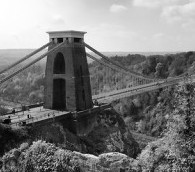
If you’ve taken a train in London or southwestern England, chances are you’ve passed through or across one of Isembard Kingdom Brunel’s bridges, tunnels or railway stations. The Victorian engineer arguably did more than anyone to shape public transit in Britain, and his creations are hard to avoid.
I’ve been a Brunel fan ever since I accidentally wound up at his 200th birthday party at the foot of Bristol’s Clifton Suspension Bridge in 2006, so I was pleased to come across this excellent slideshow from the Telegraph, mixing paintings and photographs to depict Brunel’s greatest surviving structures. I’ve made it to four of them—how about you?
R.I.P. Sandy van Ginkel, Montreal Architect
by Eva Holland | 07.27.09 | 10:36 AM ET
The Dutch-born architect and city planner, who is credited with saving the Old Montreal we know today from development, died earlier this month at 89. In the late 1950s, van Ginkel “almost single-handedly persuaded the good burghers of Montreal to abandon plans for an expressway that would have cut through the old city, destroying much of its heritage and the ambience that still draws tourists and visitors,” writes the Globe and Mail’s Sandra Martin.
‘The History and Future of Airport Design’
by Alicia Imbody | 07.23.09 | 9:18 AM ET
Slate has a great slideshow essay on the history of airport architecture. It shows how the evolution has come full circle, from the early days when all you needed was a grassy field, through innovative and artful designs that reflected the bygone days when air travel was still glamorous, to the glorified bus stations we’ve come to expect today.
R.I.P. Julius Shulman
by Jim Benning | 07.16.09 | 5:37 PM ET
 REUTERS/Fred Prouser/Files
 The famed Los Angeles architectural photographer died yesterday at his home in Laurel Canyon at the age of 98. Among his most iconic photographs: a shot of Pierre Koenig’ Case Study House #22—the photo within the photo here.
Dwell magazine put it well: “His photography helped define mid-century modernism and no one can claim more credit for documenting, and in some ways inventing, what post-war California cool looked and felt like.”
Embassy Architecture: Can the U.S. Build More Than Bunkers?
by Jim Benning | 07.10.09 | 3:08 PM ET

Our recent troubles with terrorists have wrought many changes, including the rise of American embassies designed with such a strong emphasis on security—at the expense of everything else—that they’ve become, as L.A. Times architecture critic Christopher Hawthorne puts it, “one-size-fits-all bunkers.”
But a new report issued this week entitled “Design for Diplomacy” from the American Institute of Architects suggests that, while security must be at the forefront of embassy design:
U.S. embassies can, and must, reflect American values and ideals. U.S. embassies should symbolize America’s vitality, enduring strength, decency, and innovation. These essential qualities contribute to the conduct of American diplomacy, encourage international commerce, and enhance cultural exchange.
What’s Become of the World’s Red-Light Districts?
by Michael Yessis | 06.18.09 | 3:50 PM ET
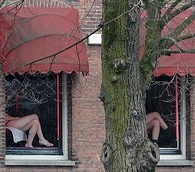
A Wallpaper slideshow looks at how red-light districts in Amsterdam, Singapore, Sydney and seven other major world cities have been cleaned up. Or, as the story’s intro describes the transformation of Times Square in New York City, how they’ve reacted after after being given an “urban colonic.”
Is This What the Next Generation Airport Will Look Like?
by Michael Yessis | 06.18.09 | 3:24 PM ET
This blurb from the New York Times Infrastructure! issue suggests it’ll be “a superhub constructed offshore on a man-made island,” with undersea high-speed train access and gardens on top of the buildings.
It’ll allegedly be efficient and green. Here’s a graphic.