
Tag: Food
‘The FedEx Meal Plan’
by Michael Yessis | 01.05.10 | 11:25 AM ET
Brett Martin’s “obnoxious” scheme: To have food from around the world sent overnight to him at his home in Brooklyn. He writes about his efforts in GQ:
The idea came to me in the midst of one of those morose funks that occur after coming home from a long trip. In this case, I had just returned from Kuala Lumpur, Malaysia. I was moping about the house, dreaming of days spent stuffing myself with a mix of Chinese, Indian, and Malay delicacies unavailable anywhere else in the world.
Or were they? I suddenly thought, snapping awake. Unavailable? What did that even mean in these modern times? After all, there is a network of couriers crisscrossing the globe twenty-four hours a day and promising that anything can be anywhere within a matter of hours. So if I craved a bowl of pork noodles of the sort sold on the streets of Kuala Lumpur, why would I need to do something as old-fashioned as actually visiting Kuala Lumpur? International shipping may be pricey, but as a way to stay connected to the tastes of the planet during lean times, it seems downright affordable.
 Email to friend
 del.icio.us
 Digg
Digg Facebook
 Furl
Furl Ma.gnolia
 Mixx
Mixx Reddit
 StumbleUpon
 Yahoo! Buzz
How to Eat Fried Tarantulas in Cambodia
by Darrin Duford | 12.18.09 | 10:41 AM ET
 istockphoto
 The crunchy exoskeletons are a favorite snack. Darrin DuFord explains where and how to chow down. (Think drive-thrus!)
NPR Delves Into the World of Marmite
by Eva Holland | 12.07.09 | 5:33 PM ET
And uses the word “sludge” twice in the first two minutes. I may be a defender of British food, but I have to confess I could never get into the dark yeasty stuff. (Via The Book Bench)
Finding the Zagat of the Napoleonic Era
by Eva Holland | 11.23.09 | 11:37 AM ET
World Hum contributor Tony Perrottet has a great read in this week’s New York Times Travel section—he heads to Paris on the trail of Alexandre-Balthazar-Laurent Grimod de la Reynière, a legendary gourmand who financed his immersion in early 19th-century Parisian dining by writing a series of proto-guidebooks, the “Almanachs des Gourmands.” It’s exactly the kind of historical tidbit I love stumbling across, though it’s not recommended for readers on an empty stomach.
The New Yorker’s Food Issue Goes Traveling
by Eva Holland | 11.17.09 | 11:31 AM ET
The new issue has a definite global bent, with stories on China’s burgeoning wine culture, spending Thanksgiving abroad and more. Most of the stories aren’t accessible online for non-subscribers, but John Colapinto’s ride-along with a Michelin restaurant inspector is available in full. There’s also a podcast to accompany Calvin Trillin’s “kamikaze” poutine mission to Quebec, and a video to go along with the Chinese wine story.
In Defense of British Food, Redux
by Eva Holland | 11.16.09 | 10:41 AM ET
I went there a few months back. Now, Matador Nights has joined the cause, with an excellent starter guide for anyone we’ve convinced to give British food a fair shot.
Photo You Must See: Halloween Sushi Bento Box
by World Hum | 10.30.09 | 2:08 PM ET

Homemade kimbap topped with nori and carrot bats. Happy Halloween!
New Travel Book: ‘Save the Deli’
by Eva Holland | 10.21.09 | 3:40 PM ET
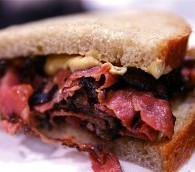
Here’s one for traveling pastrami-lovers everywhere.
“Save the Deli” follows author David Sax around Europe and North America in search of a shrinking number of Jewish delicatessens—and, though the project was driven by fears for a declining institution, the result seems to be a hopeful one.
In a letter to potential readers posted on Amazon, Sax addresses the “heresy” of his search for the deli in such unlikely spots as Salt Lake City or Brussels:
Three years ago, when I began working on this book, I too had fallen prey to the misguided notion that great deli was only confined to New York and Montreal. Anything outside those cities had to be a pale imitation. I, like many Jewish deli lovers, was narrow-minded, could see and imagine no further than the local delicatessen I frequented…a village simpleton who knows nothing beyond his little shtetl and the salamis therein.
But as I hit the road, in search of the story of delicatessen in American and around the world, I tasted revelation after revelation.
Publishers Weekly describes these revelations as “joyful moments in this otherwise elegiac travelogue,” and notes that the book’s “well-crafted portraits don’t string together perfectly, but individual chapters shine.”
Montreal vs. New York City: The Hotdog Showdown
by Eva Holland | 10.21.09 | 12:36 PM ET
Last year we blogged the great bagel debate. Now, Gadling weighs in on another staple.
Kyoto Joins Tokyo Near the Top of the Michelin Heap
by Eva Holland | 10.15.09 | 10:36 AM ET
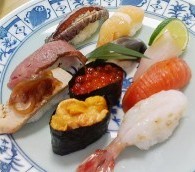
Brace yourselves, foodies of the Western hemisphere: If you were disgruntled about Tokyo landing top Michelin honors last year—receiving more stars than Paris and New York combined in its debut guide—then you probably won’t be happy to hear that Kyoto is following close behind. The city received 110 stars in its first-ever Michelin treatment, including six three-star restaurants—one more than New York City.
Alain de Botton: In Praise of Airline Food
by Eva Holland | 10.12.09 | 11:21 AM ET
In one of the dispatches resulting from his stint as Heathrow’s writer in residence, de Botton visits an airline food factory—and explains why he loves the much-maligned meals.
Naturally airline food is dismal when we compare it to what we’d get on the ground but this is to miss the point. The thrill of airline food lies in the interaction between the meal and the odd place in which one is eating it. Food that, if eaten in a kitchen, would have been banal or offensive, acquires a new taste in the presence of the clouds. With the in-flight tray, we make ourselves at home in an unhomely place: we appropriate the extraterrestrial skyscape with the help of a chilled bread roll and a plastic tray of potato salad.
Mapped: The Cheeses of Britain and Ireland
by Eva Holland | 10.08.09 | 10:57 AM ET
Another tasty bite of geographical fun—and more proof that British food is worth defending. (Via @LPUSAstaff)
R.I.P. Gourmet
by Eva Holland | 10.05.09 | 4:02 PM ET
The 69-year-old magazine, which has published many fine foodie travel stories over the years, will be ceasing publication along with several other magazines cut this week at Conde Nast. Here’s just one travel classic from the Gourmet archives, David Foster Wallace’s Consider the Lobster.
From Buenos Aires to Koh Chang: The World’s Worst Pizzas
by Eva Holland | 09.30.09 | 9:57 AM ET
Pizza addict Tom Gates is nine months into a year-long RTW, and in that time he’s encountered some truly disgusting pies—think maraschino cherry and french fry toppings. Check out his round-up of the five worst, and be ready for some vivid language and appalling images.
The World’s Most Carnivorous Countries
by Michael Yessis | 09.29.09 | 12:11 PM ET
Good posted a clever interactive graphic. The most carnivorous country per capita? Denmark.
McDonald’s in America, Mapped
by Eva Holland | 09.25.09 | 12:59 PM ET
Check out this cool (if slightly disturbing) map of every McD’s location in the lower 48—where, apparently, you’re never more than 107 miles away from the nearest Big Mac.
Kimchi Taco, Meet the JapaDog
by Eva Holland | 09.24.09 | 3:18 PM ET
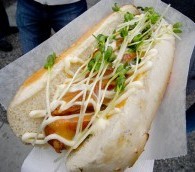
Anyone who was intrigued by L.A.’s kimchi tacos will want to read the latest Frugal Traveler dispatch from Vancouver, wherein Matt Gross explores daikon- and soy-sauce-topped hot dogs and other low-budget fusion delights.
Michelin’s Guides Explained
by Eva Holland | 09.24.09 | 10:58 AM ET
The Daily Beast demystifies the powerhouse foodie-travel guides from the tire manufacturing giant. Did you know that the books actually started out as road trip pamphlets marking the locations of gas stations and mechanics?
The Rise of America as Culinary Destination
by Michael Yessis | 09.23.09 | 9:55 AM ET
Just a few decades ago, America was a culinary wasteland. Now, it’s foodie central. Why? Jerry Weinberger points to, among other things, the Great Woman theory of history:
The first wedding gift my wife and I received, in 1965, was a copy of Mastering the Art of French Cooking, by Julia Child (with Simone Beck and Louisette Bertholle). It still sits on a shelf in our kitchen, bound now by tape, with almost every page earmarked and blotched. Published in 1961, Child’s book brought the techniques of French haute cuisine to the American kitchen, teaching us how to soak and sauté sweetbreads, how to make soufflé au Grand Marnier, how to cut up a duck—all within the limits of the American supermarket of the period. But it was Child’s later TV show, Boston PBS’s The French Chef, that really changed things. It was unintimidating French cooking: the chef was a goofy-talking giant who dumped in the butter and occasionally spilled things and whacked stuff with mallets and sometimes burned the sauce.
But Julia taught us how to master French cooking, not American. American food had to be invented before it could be mastered. And the inventor was another Great Woman, this one on the opposite coast. In 1971, Alice Waters opened Chez Panisse in Berkeley, California. This was the great transformative event in American culinary history. Chez Panisse grew out of Waters’s experience not with the butter and fat of Parisian haute cuisine, but with the foods of Mediterranean Provence (based on olive oil, the fresh fruits of the earth and sea, and the general habit of going to the market with a string bag every day). The principle of Chez Panisse was that food—both animal and vegetable—should be absolutely fresh, and that meant absolutely local. So it’s not quite right to say that Waters had to invent American food; what she did was rediscover and then elaborate on pre-canned, pre-supermarket, pre-tomatoes-all-year-round regional American food.
The Decline of the Traveling ‘Food Anthropologist’
by Eva Holland | 09.22.09 | 10:01 AM ET
Over at the VQR blog, Michael Lukas offers a lament for the days when cookbook authors—instead of being celebrity chefs sharing their singular visions—were more like “food anthropologists”: “They visited home cooks and chefs in their kitchens, beat the pavement, and found recipes in dusty archives.” The last generation of food writers, he argues, “had an entire world to discover.” (Via The Book Bench)