
Destination: United States
R.I.P. Richard Marks
by Michael Yessis | 12.17.08 | 9:38 AM ET
Marks suffered from leprosy, aka Hansen’s Disease. Like thousands of others with the disease, he was banished to the Kalaupapa leprosy colony on the Hawaiian Island of Molokai. Marks helped overturn the quarantine, and he remained on the island, operating a tour company and educating travelers about the disease. He also “achieved his goal of establishing Kalaupapa National Historical Park in 1980 with the help of late Hawai’i congresswoman Patsy Mink,” according to the obituary in the Honolulu Advertiser. He was 79.
 Email to friend
 del.icio.us
 Digg
Digg Facebook
 Furl
Furl Ma.gnolia
 Mixx
Mixx Reddit
 StumbleUpon
 Yahoo! Buzz
Morning Links: ‘Ugly American’ Ad, World’s Best Hotels and More
by Michael Yessis | 12.17.08 | 8:57 AM ET
- A Burger King ad featuring “Whopper Virgins,” aka “remote Chang Mai villagers,” is being called “‘corporate colonialism,’ ‘cultural bullying’ and the worst kind of Ugly Americanism.” Stacy Peralta, a legend of my childhood, directed the ad.
- A tower collapsed at Whistler-Blackcomb yesterday, injuring more than a dozen and “and trapping other skiers for hours in dangling cars during a cold snap.”
- Travel + Leisure released its annual list of the 500 best hotels in the world.
- The casinos are behind the new weekend express trains between New York City and Atlantic City.
- Why do physicians write so well? Among those cited: Sometime travel writer, the late Michael Crichton.
- Health Magazine lists America’s Healthiest Airports.
- TSA in 2008: Gadling chronicles a year of being dumb.
- It’s sad that this story—37% of Americans Unable to Locate America on Map of America—had to include a disclaimer: “This post is a satire.” Though after skimming through the dumb things the TSA did this year, perhaps I’m being a little too optimistic in my belief in the competence of my fellow Americans.
Morning Links: Taj to Reopen, ‘The Pervert’s Grand Tour’ and More
by Michael Yessis | 12.16.08 | 9:38 AM ET
- The Taj Hotel, one of the Mumbai sites stormed by terrorists last month, plans to reopen some of its rooms Sunday night.
- Joe Brancatelli writes: “Like it or not, acts of terror aimed at travelers and the places they frequent are very good business tactics indeed.”
- Rome and Milan are now connected by the high-speed Red Arrow train.
- Tony Perrottet continues his Pervert’s Grand Tour at Slate. “Sex,” he writes, “Sex has always been the unspoken inspiration for travel.”
- Delta adds WiFi to some East Coast shuttle flights. The airline says it will make its entire fleet wireless by the middle of next year.
- Robbie Knievel will jump the volcano at the Mirage in Las Vegas on his motorcycle on New Year’s Eve. I’ve been to Vegas on New Year’s Eve. This will not be the craziest thing that happens that night.
Emergency Rations: Lessons From a 16-Hour Amtrak Ride
by Eva Holland | 12.15.08 | 1:17 PM ET

I have this theory about successful budget transit: that the key to surviving a cross-country Greyhound ride, or a bargain-basement flight with three changes (all in small regional airports without so much as a Starbucks, naturally) is to never, ever be caught without a snack. After all, the only thing worse than being forced to buy, and eat, that simultaneously-stale-and-soggy packaged tuna sandwich at the truck stop is not having the option of eating anything at all. Right?
I first started packing what I think of as my “emergency rations” on a trip to India several years ago. The granola bars I’d stuffed into every corner of my backpack were handy on long train rides—and after I (inevitably) got sick, they became invaluable, my sole source of nutrition until I could stand to contemplate curry again. That success led to more advanced efforts: I can still remember the looks I got from other passengers when I boarded a Halifax-Montreal overnight train with an enormous Tupperware full of cold stir fry under my arm. But my habit of packing lunch didn’t evolve into a full-blown theory until one fateful Amtrak ride, from New York to Montreal, around this time last year.
Morning Links: Jellyfish Gone Wild, Sedaris and More
by Michael Yessis | 12.15.08 | 8:35 AM ET
Catch up on links from our redesign break:
- Brave New Traveler lists The 6 Characters You’ll Meet At Every Expat Bar.
- Recession travel: Trade depressed stock for Caribbean resort stays.
- TSA critic Jeffrey Goldberg sat for an interview with Stephen Colbert.
Seventy Ways Travel Magazines Address the Economic Crisis
by Tom Swick | 12.15.08 | 12:18 AM ET
 Photo by Charles Campi
 Contemplating and celebrating the world of travel
World Hum’s Restless Legs Reading
by World Hum | 12.11.08 | 4:21 PM ET
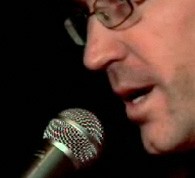
World Hum teamed up with Restless Legs Reading Series host and World Hum contributor David Farley in New York City for a night of readings for the wanderlust stricken.
Washington D.C. To World: During Inauguration Weekend, We’re Keeping our Bars Open Late For You
by Michael Yessis | 12.03.08 | 11:58 AM ET
The D.C. Council voted to allow bars, nightclubs and restaurants to pour booze until 5 a.m., and to serve food 24 hours a day, from January 17-20. That’s the long weekend before Barack Obama will be sworn in as the 44th president of the United States. So you may not be able to find a place to sleep, but you’ll always be able to find a place for a Yuengling and a crab cake.
‘You Could Literally Smell the Tourists Coming Into the Capitol’
by Michael Yessis | 12.03.08 | 11:52 AM ET
Senator Harry Reid’s staff told him not to say that, but, yeah, he said that. During the opening of the new Capitol Visitors Center, he said, “In the summer because of the heat and high humidity, you could literally smell the tourists coming into the Capitol. It may be descriptive but it’s true.” His not-so-populist statement and the opening of the $621 million facility has proved good fodder for writers. My favorite take: Dana Milbank’s column in the Washington Post. He nails Reid, as well as House Minority Leader John Boehner.
He writes:
But where Reid saw toilets and trinkets, Boehner saw history. Recalling the British burning of the unfinished Capitol in 1814, he concluded: “It took 38 years and two wars to truly gain our independence, and it took several generations and a bloody Civil War to end slavery and win freedom for millions of African Americans. And today, we mark the opening of the Capitol Visitors Center.”
So, children, those are the great moments in American history: the Revolution, the War of 1812, the Civil War and the opening of the Capitol Visitor Center.
California’s Proposition 8 Fallout: Boycott Utah?
by Jim Benning | 12.01.08 | 1:18 PM ET
Supporters of gay marriage—angered by reports that members of the Mormon Church donated millions of dollars to back Proposition 8 on California’s November ballot—are calling for a boycott of travel to Utah, including the Sundance Film Festival.
What Food Writers Really Think of Thanksgiving
by Eva Holland | 11.26.08 | 2:09 PM ET
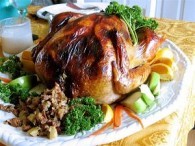
Turns out, they can’t stand the annual turkey fest—at least according to Slate’s Regina Schrambling, who offers a hilarious rant on the subject, just in time for the holidays. “What makes me totally crazy,” she writes, “is the persistent pressure to reinvent a wheel that has been going around quite nicely for more than 200 years. Every fall, writers and editors have to knock themselves out to come up with a gimmick—fast turkey, slow turkey, brined turkey, unbrined turkey—when the meal essentially has to stay the same.”
Hitting the Road This Holiday?
by Valerie Conners | 11.26.08 | 10:44 AM ET
While you’re far from alone, the AP reports that despite falling gas prices and last minute vacation deals, fewer people are traveling this Thanksgiving eve, typically one of the busiest travel days of the year.
Museums: 850 Million. Sports: 140 Million.
by Michael Yessis | 11.25.08 | 10:37 AM ET
That’s how many people visit museums in the U.S. annually vs. the number who attend major league sporting events. The stats come from NPR’s eye-opening new series on museums in the 21st century. Bob Mondello reports: “Despite any bad rap for being boring or undervalued, there are still 850 million people coming through the nation’s museums each year, Why? As Philippe de Montebello, former Metropolitan Museum of Art director, says simply, ‘A museum is the memory of mankind.’”
Los Angeles Museum of Contemporary Art Endangered
by Jim Benning | 11.24.08 | 1:06 PM ET
The museum has fallen on hard times, but L.A. philanthropist Eli Broad just offered up $30 million to help.
Ry Cooder’s El Mirage and Los Angeles
by Jim Benning | 11.24.08 | 11:46 AM ET
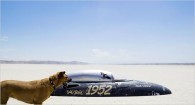
This is one of the coolest travel stories I’ve read in a while. The New York Times joined Ry Cooder in exploring El Mirage Dry Lake in California’s Mojave Desert, as well as parts of Los Angeles, both areas Cooder has evoked in concept albums. Writes Lawrence Downes:
When Ry Cooder and I got to El Mirage Dry Lake, it was 110 degrees and heading to 117, hot enough to cook your head inside your hat. The Mojave Desert in daylight will cut the gizzard right out of you, Tom Joad once said, which is why the Okies crossed it at night.
The accompanying slideshow, featuring one of Cooder’s songs, shows just how powerful a good audio slideshow can be.