
Tag: Food
Eating Japanese: The World’s ‘My Boom’ Food
by Michael Yessis | 05.21.07 | 10:03 AM ET
Japanese cuisine is having a moment. As we’ve noted, Western chefs are beginning to embrace kaiseki, a 500-year-old Japanese eating tradition. The Los Angeles Times recently highlighted it, and the writers of that story also hit Tokyo’s restaurant scene with Spago chef Lee Hefter. In Sunday’s New York Times T Style Magazine: Travel, Adam Sachs takes his own “professional eating” tour through Tokyo, offering up a quick history of Japanese food and his take on a dining scene that, for depth and variety, “has no equal.”
 Email to friend
 del.icio.us
 Digg
Digg Facebook
 Furl
Furl Ma.gnolia
 Mixx
Mixx Reddit
 StumbleUpon
 Yahoo! Buzz
The World Hum Travel Zeitgeist: From Chocolate to Kaiseki
by Michael Yessis | 05.18.07 | 5:09 PM ET
Or, in other words, travelers’ interests this week range from Hershey, Pennsylvania to the streets of Japan. Here’s the Zeitgeist.
Most Popular Travel Story
Netscape (this week)
Magnificient Trees of the World
* The Lone Cypress in Pebble Beach, California (pictured) makes the list.
Most Viewed Travel Story
Los Angeles Times (current)
A Tour of Japanese Cuisine With Spago Chef Lee Hefter
* From the same writers: A look at kaiseki
Most Read Weblog Post
World Hum (this week)
Japan’s Latest Budget Accommodation: Internet Cafes
* The nation that brought us the capsule hotel has done it again.
Most E-Mailed Travel Story
USA Today (current)
Hershey Honors its Past, Looks to the Future
Most Viewed Travel Story
Telegraph (current)
Amsterdam: Telegraph Travel Guides
Most Popular Page Tagged Travel
Del.icio.us (recent)
Farecast
Most Read Feature Story
World Hum (this week)
Mark Ellingham: Rough Guides and the Ethics of Travel
“Hot This Week” Destination
Yahoo! (this week)
Playa del Carmen
The Hot New Trend in Japanese Cuisine: 500-Year-Old Kaiseki
by Jim Benning | 05.17.07 | 2:20 PM ET
We’re talking seriously old school—and expensive. Kaiseki, the Japanese cuisine that began in Kyoto more than 500 years ago, is suddenly all the rage these days, according to the L.A. Times. With its extreme focus on presentation and seasonal ingredients, it’s captivating trend-setting Western chefs from Spain to the U.S. (Okay guys, you’re a little late, no?) “The dining experience is intimate, more like going to someone’s home than to a restaurant,” the paper reports. “Most traditionally, the meal is served in your own room at a ryokan—as most in Kyoto still do—while you are wearing a kimono and reclining on a tatami mat. It feels much that way in a kaiseki restaurant like Kikunoi, where you dine in a private room, often with a view of a serene garden, sculptured to be viewed from tatami level.”
Eating Fajitas in France
by Jim Benning | 05.07.07 | 9:35 AM ET
 iStockPhoto
 He's a Mexican food addict. So when Jim Benning spotted the Tex-Mex restaurant in Lyon, France, he had to eat there. He knew it would be awful.
Restaurants ‘Nudge Diners’ in Campaign for Zagat Votes
by Michael Yessis | 05.04.07 | 8:26 AM ET
The Zagat guides took another punch this week. The New York Post’s Steve Cuozzo revealed that restaurant owners in New York are mounting e-mail campaigns to have diners vote for their restaurants, a practice allegedly forbidden by the Zagats. Yet, according to the Post, the Zagats don’t seem to be enforcing their rules.
United Airlines Switches to Coke. Uh, Hooray?
by Jim Benning | 05.02.07 | 10:57 AM ET
We’re not sure why, but it was widely reported yesterday that United Airlines is switching from Pepsi to Coke on its flights. “We look forward to the joint promotional activities that consumers and employees will be able to participate in and the economic benefits this new agreement brings to United,” an airline official was quoted as saying. Right. As a traveler—I mean, flying consumer—let me just say that I can’t wait to participate in those joint promotional activities. Perhaps I can do so while munching on the insipid, plastic-wrapped turkey-wasabi sandwiches—food units, if you prefer—that United is selling for five bucks in economy class. Oh, the economic benefits. Oh, the promotional possibilities.
Photo by mag3737 via Flickr, (Creative Commons).
Stalking the Best Boulangeries in Paris
by Jim Benning | 04.30.07 | 1:19 PM ET
I’ve never met a chocolate croissant I didn’t like, but even I, a mere croissant dilettante, recognize that some are better than others. Travel + Leisure offers a look at the best boulangeries in Paris, covering top spots for croissants, baguettes, sourdough loaves and other starchy treats. Maison Kayser in the Latin Quarter is one of the shops earning rave reviews. Among other qualities, their croissants have a “meltingly tender center,” the magazine maintains. Meanwhile, elsewhere in town, Boulangerie Bechu offers pain au chocolate orange, which the magazine calls “an addictive variation on the classic treat.”
Photo by stu_spivack via Flickr, (Creative Commons).
‘Some 60 Percent of Italian Restaurants Abroad Are Awful’
by Jim Benning | 04.27.07 | 3:25 PM ET
The Rise of the Trader Joe’s Pilgrimage
by Jim Benning | 04.19.07 | 7:02 AM ET
I hadn’t heard of interstate pilgrimages to Trader Joe’s grocery stores until Dallas Morning News travel editor Larry Bleiberg mentioned the phenomenon to me recently. Turns out, Bleiberg wrote a piece last summer about the amazingly long journeys some people make to Trader Joe’s to stock up on the store’s unique selection of cheap gourmet items, from Two Buck Chuck wine to corn syrup-free sweets. It made perfect sense.
And the 2007 Pulitzer Prize for Travel Writing Goes to?
by Jim Benning | 04.16.07 | 4:31 PM ET
Nobody. The 2007 Pulitzer Prizes were awarded today, but of course, there’s no category for travel writing. Still, we’re delighted that LA Weekly food writer Jonathan Gold won the Pulitzer for criticism. That’s close enough, because Gold approaches Los Angeles restaurants with a traveler’s sensibility, venturing into hole-in-the-wall ethnic restaurants where few food critics dare to go, from Thai Town to Little Ethiopia. His 2000 book, Counter Intelligence: Where to Eat in the Real Los Angeles, is probably a little dated by now, but it’s still a great guide for anyone seeking out the city’s most interesting food—and neighborhoods.
Odorless Durian? That Stinks.
by Jim Benning | 04.09.07 | 5:14 PM ET
The first time a Singaporean friend insisted I try durian, that notoriously stinky Southeast Asian fruit, I feared the worst. I’d heard fellow travelers’ horror stories and read all about how the fruit had been banned in hotels and on Singaporean trains. My friend shrugged all that off and carefully selected one of the spiky fruits at a giant outdoor stall near his home, eliminating the need to smuggle it onto a train. Yes, it smelled like sweaty feet. But when we sliced it open and dug in, I enjoyed my first bites, savoring its sweet flavor and buttercream consistency. Then, after a few more bites, I started to feel a little ill, overwhelmed by the rich, nutty flavor and odor. So I’m not a big fan of durian.
Sports Bars Go Airborne: ‘We Definitely Sell a Lot More Liquor When Games Are On’
by Michael Yessis | 03.29.07 | 8:34 AM ET
Those are the words of Frontier Airlines flight attendant Natalie Ordakowski, one of many sources to tell the New York Times what anyone who has flown a Frontier or JetBlue flight during a big game already knows: Satellite TV has turned some airplanes into sports bars, complete with cheering fans—or, depending on your perspective, drunken yahoos. ESPN, the Times reports, is Frontier’s most watched channel “by far” and it’s one of JetBlue’s three most watched channels. This week, Setanta Sports announced it will join its JetBlue’s satellite TV lineup, so fans will be able to fly, drink and watch international rugby and soccer matches.
Photo by Jsendoorn (via Flickr). Rights: Creative Commons.
Chinese Traveler Spends Record 23,000 Euros in Duty-Free Spree
by Michael Yessis | 03.22.07 | 7:08 AM ET
His haul in Paris included a bottle of 1945 Chateau Mouton Rothschild, a Cotes de Rhone Hermitage la Chapelle 1978 and “a bottle of 1806 cognac that might have slipped through the fingers of Emperor Napoleon,” according to Reuters. Aeroports de Paris Shops, where the unnamed Chinese traveler made his purchases, says it has started to carry luxury items to cater to rich travelers from China, Japan and Russia. I’m sure the traveler had the good sense to avoid this mess in Miami on his way back to Beijing.
A Very Long Way to the Hong Kong Cafe
by Daisann McLane | 03.21.07 | 6:52 AM ET

In Ilulissat, Greenland, Daisann McLane found one righteously good Singapore curry chau mihn. More surprising, though, was the man who emerged from the kitchen when she shouted, "Hai go douh yauh mouh jung gwok yan a?"
Holy Land Hooters
by Jim Benning | 03.19.07 | 3:13 PM ET
No kidding. The restaurant chain is bound for Israel. Declares the man behind the project: “I strongly believe that the Hooters concept is something that Israelis are looking for.”
Related on World Hum:
* Hooters Casino Hotel Opens Today in Las Vegas
* Lesson No. 1 of Hooters Air: It Is Awfully Difficult to Make Buffalo Wings at 30,000 Feet
Japan Unveils Plan for ‘Sushi Police’
by Michael Yessis | 03.19.07 | 7:26 AM ET
Japan’s agricultural ministry will fight the “gastronomic indignities” of bad sushi, but to the relief of some, surprise raids won’t be part of the plan. Instead, restaurants around the world will be able to request an authenticity test of their menu. “The test would centre on food staples, such as miso soybean paste and rice, cooking techniques and seasoning,” according to a Reuters report. Restaurants that pass the test will get official government recommendation. Japan, as we’ve noted, takes the creeping bastardization of its cuisine seriously.
Related on World Hum:
* Hide the California Rolls! Here Comes Japan’s ‘Sushi Police’
* Update: Japan’s ‘Sushi Police’
Photo by rubyran, via Flickr (Creative Commons)
The Authentic Irish Pub vs. the ‘Irish Pub Concept’
by Michael Yessis | 03.17.07 | 10:44 AM ET
Remember: Wherever you are in the world—from Kazakhstan to the Canary Islands to Dubai—a faux Irish pub awaits. And if you’re lucky enough to be in Ireland, here’s how to be a first-class punter. Happy St. Patrick’s Day to all.
American Travelers Embracing (Gasp!) Food Tourism
by Jim Benning | 02.28.07 | 1:20 PM ET
We all know Americans love their food, so it’s not surprising that food is playing a prominent role in their travels these days. Nevertheless, a new study confirms it, finding that 27 million Americans have recently made culinary experiences—including wine tours and cooking classes—a part of their holidays. Barry Glassner, author of the new book “Gospel of Food” (as well as the excellent “The Culture of Fear”) isn’t surprised. “We define ourselves by how we eat,” he told the AP. “We show others and we show ourselves what kind of people we are by how adventurous we are about food.” So where are Americans going for culinary tourism? Among U.S. states, California leads the way, followed by Florida and New York.
Related on World Hum:
* How To: Dig Dim Sum in Hong Kong
* The Pasta Nazi
* Confessions of a Chicken Man
Photo by Jim Benning.
How to Dig Dim Sum in Hong Kong
by Valerie Ng | 02.21.07 | 3:00 PM ET
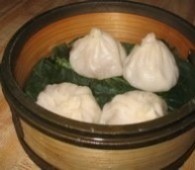 Photo by Valerie Ng
 No visit is complete without indulging in the breakfast and lunch specialty. Valerie Ng explains the difference between cha siu bao and daan taat -- and where to dip your Chinese donut.
On the ‘Red Sauce Trail’ in Italy
by Sarah Schmelling | 02.21.07 | 1:02 PM ET
We’ve read a lot of great culinary travel tales, but this one in today’s New York Times takes the, well, sauce. Kim Severson recently became obsessed with tracking the source, or at least the ancestry, of her mother’s beloved spaghetti sauce. It’s a sauce that she’s been eating—and trying to measure up to in her own kitchen—her whole life. Her quest led her to the Italian village of Ateleta, where her maternal grandmother grew up and where she’s told she’s “luckier than Madonna” because, unlike the pop star, she was able to find distant Italian relatives—and perhaps the key to unlocking her own personal “spaghetti code.”