
Destination: Asia
In Taiwan, A Toilet Too Far
by Julia Ross | 02.26.09 | 10:57 AM ET

My great affection for the Taiwanese notwithstanding, sometimes I’m just plain baffled by the trends that take hold on the island. Case in point: toilet-themed restaurants. Yes, a chain called Modern Toilet now has nine outposts in Taiwan, and is apparently a hit among teens and college students. GlobalPost describes the fad this way:
“Here, customers sit on toilets and eat on covered washbasins. The most popular dishes are chocolate ice cream or curry chicken, served in a mini-toilet. Why? ‘It looks like poo-poo,’ explained Jary Wei, assistant manager at the chain’s Taipei branch. ‘The customers think it’s funny.’”
Charming.
Airplane, prison and hospital-themed restaurants have also caught on in Taiwan—more evidence that the island takes its cultural cues from Japan, which pioneered the trend—but, really, toilets?
In defense of Taiwanese college students, I’ll just say that I advised a number of them while I was living on the island and found them to be exceedingly bright and cosmopolitan. Then again, they’re under a lot of academic pressure, so maybe a visit to Modern Toilet yields some, uh, relief.
 Email to friend
 del.icio.us
 Digg
Digg Facebook
 Furl
Furl Ma.gnolia
 Mixx
Mixx Reddit
 StumbleUpon
 Yahoo! Buzz
Morning Links: A Wordy Map of St. Petersburg, the Joy of L.A. Traffic and More
by Michael Yessis | 02.26.09 | 9:38 AM ET
- New Homeland Security Secretary Janet Napolitano says yes to body scanners.
- World Hum contributor Tim Patterson chronicles the struggle of the Kachin people of Myanmar.
- USA Today looks at “what might be the most endangered airline in the USA.”
- NPR has an interview with the world-traveling ethnographers from The Linguists.
- Happy 450th birthday Pensacola, Florida.
- Matthew Polly goes to St. Petersburg, Russia, in Slate’s latest Well-Traveled.
- This map of literary St. Petersburg was created using lines from Russian writers about St. Petersburg. (Via The Book Bench)
- Daniel Fox aims to shoot more than 100,000 digital images from around the world for the Wild Image Project.
- The Freakonomics blog is in the midst of a six-part series about the facts and fiction of Los Angeles Transportation. I find it compelling, though maybe I’m just looking at the gray skies here in D.C., waiting for winter to end, daydreaming about my upcoming trip back home.
Got a suggestion? .(JavaScript must be enabled to view this email address) your link.
India: Three Great Books
by Eva Holland | 02.25.09 | 6:32 PM ET
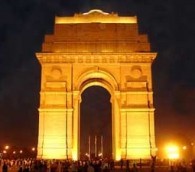
The literature about India is as vast and diverse as the subcontinent that inspired it. In 60 years of independence, the country has produced a truly intimidating list of award-winning writers, from Salman Rushdie and Vikram Seth to Rohinton Mistry and Arundhati Roy, R.K. Narayan or Anita Desai. Faced with the impossibility of choosing just three novels from an endless list of great post-colonial reads, I’ve decided instead to go back further in time, to the days of the British Empire. The colonial period produced a few classics of its own, and since then, with the passing of time, new books have started to arrive that capture the colorful lifestyles, the dark patches of history, and the many oddities and implausibilities of the British Raj. Three great books:
Video: Jeffrey Tayler: ‘I Was Getting in Over My Head’
by World Hum | 02.25.09 | 10:34 AM ET
Jeffrey Tayler pedaled more than 1,000 miles down the Grand Trunk Road in India, a journey he chronicled for World Hum.
Cycling India’s Wildest Highway: Paradise is Stinky
by Jeffrey Tayler | 02.25.09 | 10:20 AM ET
 REUTERS/Jayanta Shaw
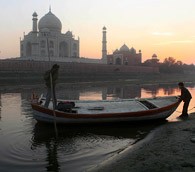
 In which Jeffrey Tayler pedals more than 1,000 miles along the Grand Trunk Road. Part three of five: To the Taj Mahal.
Kangding, China
by World Hum | 02.25.09 | 9:49 AM ET
 REUTERS/David Gray
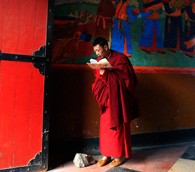
 A Tibetan monk prays in front of a mural at the entrance to the Namo Monastery, founded over 1,100 years ago, located on the outskirts of Kangding in Sichuan province.
Newspapers: Still Big in Japan
by Julia Ross | 02.24.09 | 5:45 PM ET
 From the front page of today's Asahi Shimbun.
 As many of us await the impending death of U.S. newspapers, it’s helpful to remember that the paper-and-ink medium thrives in other parts of the world, where Internet penetration remains relatively low. Such is the case in much of Asia, Time reports this week. India alone reported 11.5 million new newspaper readers in 2008, spread among a whopping 65,000 newspapers across the country, and Indonesia’s market has grown from a few dozen papers in 1998 to about 800. The Japanese, despite widespread online access, are still the world’s most dedicated newspaper readers, subscribing to more than one paper per household, on average.
So, how does this tie into travel? After reading the Time piece, it occurred to me that in a couple years, spying newspaper readers in subways or cafes—or being able to get one’s hands on an actual newspaper itself—may become as novel as slicing into a durian fruit for Western travelers visiting Asia. Imagine picking up the latest Asahi Shimbun as a souvenir on your way out of Narita. With kimono weavers on the way out, printing presses could be the next big thing in niche tourism.
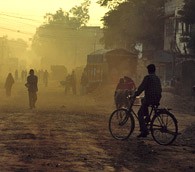
Cycling India’s Wildest Highway: ‘Arise, Son of Kunti’
by Jeffrey Tayler | 02.24.09 | 9:56 AM ET
 iStockPhoto
 In which Jeffrey Tayler pedals more than 1,000 miles along the Grand Trunk Road. Part two of five: The road to Delhi.
Bicyclists in India
by World Hum | 02.24.09 | 9:42 AM ET
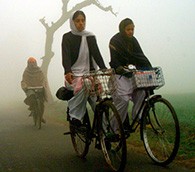 REUTERS/Munish Sharma
 A photo slideshow of cycling in India, from Kolkatta and Delhi to Ladakh.
See the full photo slideshow »
Morning Links: A Hard-to-Find French Town, Photos of Carnival and More
by Michael Yessis | 02.24.09 | 8:55 AM ET
- Video: The Battle of the Oranges.
- A French town wants a new name that’s easier to find via search. It’s current name? Eu.
- Blog to watch: World Hum contributor Daisann McLane has launched a companion blog to her National Geographic Traveler column.
- Florida bans fish pedicures. What’s a fish pedicure? Here’s some video of McLane getting one in Malaysia.
- Photos: The Big Picture goes to Carnival.
- $28,067.31 for a “wireless session” on a cruise ship? Here’s the tale. (via Cruise Log)
- Some compelling photos of 19th- and 20th-century railway lines by Mark Ruwedel.
- Love this graphic: The most-used subway systems in the U.S and around the world.
- My obsession with travel typos continues: Here’s a look at NYC Transit’s Top Typos!
Got a suggestion? .(JavaScript must be enabled to view this email address) your link.
A Very International Oscars
by Eva Holland | 02.23.09 | 2:38 PM ET
Last night’s Oscars ceremony is likely to be up for debate for some time—among the most contentious issues, for me, is the fact that the cast of “High School Musical” got more screen time than most nominees—but one thing is certain: it was the most international Oscars since 2004, when Charlize Theron thanked everyone in South Africa, and the winners from “Lord of the Rings” managed to name-drop just about everyone in New Zealand, too.
In the 2009 edition, there were acceptance speeches smattered with Spanish (Penelope Cruz, for “Vicky Cristina Barcelona”) and Tamil (A.R. Rahman, the composer for “Slumdog Millionaire”), there were shout-outs to Mumbai (from the assortment of “Slumdog” winners, who took home 8 awards between them), and there were two separate winners from Japan.
My favorite globally-flavored Oscar moments, after the jump:
Video: Jeffrey Tayler on Cycling Across India
by World Hum | 02.23.09 | 10:42 AM ET
Jeffrey Tayler pedaled more than 1,000 miles down the Grand Trunk Road in India, a journey he chronicled for World Hum.
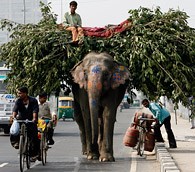
Cycling India’s Wildest Highway: Into the Hurly-Burly
by Jeffrey Tayler | 02.23.09 | 10:42 AM ET
 REUTERS/Desmond Boylan
 In which Jeffrey Tayler pedals more than 1,000 miles along the Grand Trunk Road. Part one of five: setting out.
Heard on the Tokyo Street: ‘Yes, We Can’
by Julia Ross | 02.23.09 | 10:27 AM ET
They loved him in Canada last week for buying maple leaf cookies, but in Japan, they’re hanging on Barack Obama’s every word. It seems the President’s speeches have kicked off the latest language-learning trend among English-crazy Japanese. In the country’s ubiquitous English schools, teachers are urging students to memorize Obama’s speeches line by line, with a passion to match. Reports the Wall Street Journal: “‘The Speeches of Barack Obama,’ a best-selling book that comes with a CD and a glossary for phrases like ‘spin master’ and ‘stop-gap measures,’ sold 480,000 copies in Japan in three months.” I think that qualifies as a trend.
Funny, I haven’t tried this approach in my long struggle to learn Mandarin. Hu Jintao’s speeches somehow lack equivalent ... charisma.
Morning Links: Mexico Travel Alert, Mardi Gras Tips and More
by Michael Yessis | 02.23.09 | 9:46 AM ET
- A bomb exploded in Cairo’s Hussein Square, killing at least one tourist.
- China has closed Tibet to international travelers in preparation for the 50th anniversary of the Dalai Lama’s exile.
- The Washington Post says the latest State Department travel alert for Mexico “reads like the plot of a crime thriller.”
- USA Today/Gallup poll: 58 percent of Americans “will shrink their vacation spending this year—or just not go.”
- Here’s what not to do at Mardi Gras.
- Tom Haines follows the wind in North Dakota.
- World Hum contributor David Farley will be speaking tonight at the National Museum of the American Indian in Washington D.C.
- The Christian Science Monitor has more on Lucca’s ban of ethnic restaurants.
- Is a lost empire concealed in the Amazon?
- Has Atlantis been found by Google Ocean? Google says no.
- Two travel books made the pages of The New York Times Sunday Book Review: Magic Bus and The Way of Herodotus.
- Another day, another mix-up: A pass for Philly Beer Week features the skyline of New York City. Really, how could you mix ‘em up?
Got a suggestion? .(JavaScript must be enabled to view this email address) your link.