
Destination: China
A Chef’s Travels in China
by Julia Ross | 04.06.09 | 12:04 PM ET
It’s hard to resist chef Martin Yan’s enthusiasm for the innovations of Chinese cuisine in this recent conversation with New York Times reporter and author Jennifer 8. Lee, taped at the Asia Society.
The voluble Yan discusses his travels into China’s far corners, doling out praise for hand-pulled noodles in Shenzhen, the spice markets of Xian and Taiwan’s night markets. In recent years, many Western-trained Chinese chefs have returned home to introduce a new fusion cuisine, he notes, including pizza-like dishes in the north, and recipes making liberal use of eggplant and tomato, ingredients not traditionally associated with Chinese cooking.
Among Yan’s favorite Chinese comfort foods: the doughnut twist (with soy milk) you can find on just about every street corner in Taipei during morning rush hour.
 Email to friend
 del.icio.us
 Digg
Digg Facebook
 Furl
Furl Ma.gnolia
 Mixx
Mixx Reddit
 StumbleUpon
 Yahoo! Buzz
Interview With James Wallace: Reflections From an Aerospace Reporter
by Rob Verger | 04.03.09 | 9:26 AM ET
 Photo courtesy of James Wallace.
 Award-winning reporter James Wallace covered aerospace for the Seattle Post-Intelligencer for more than 12 years. He worked for a total of 27 years at the paper, which recently stopped printing and transitioned to an online-only version with a comparatively tiny reporting staff. When that happened, Wallace’s job disappeared.
Wallace, who wrote a goodbye blog entry, is the author of two books, “Hard Drive” and “Overdrive,” both about Microsoft.
I caught up with him over the phone to hear about his years on the aviation beat.
World Hum: You covered aerospace for 12 years. How have you seen commercial air travel change during that time?
Clockwatching in Western China
by Julia Ross | 04.01.09 | 12:44 PM ET
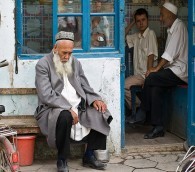
If you’re traveling in Kashgar, China, over the summer, don’t be surprised if the sun sets at 11 p.m. That’s because the old Silk Road city—like all of China—is required to follow the clock in Beijing, some 2,000 miles east. Aside from throwing circadian rhythms out of whack, the policy has exposed political fault lines in the region: the minority Muslim Uighurs, resentful of Chinese suppression of their culture, insist on setting their own clocks, two hours earlier.
Video: How to Drink Tea in China
by Matteus Frankovich | 04.01.09 | 8:34 AM ET
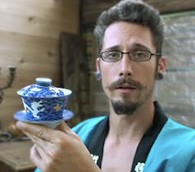
Grab your gaiwan and tea leaves. Matteus Frankovich explains the proper way to drink tea in China.
In Hong Kong, Taking the Rugby Cure
by Julia Ross | 03.30.09 | 10:21 AM ET
Recessionary times didn’t keep the Hong Kong Sevens rugby tournament from continuing its storied tradition of “off-the-hook drinking and off-the-record debauchery” this weekend, reports the New York Times. Expat lawyers, diplomats and bankers from across Asia turned up in Hong Kong Stadium dressed—in keeping with tradition—as gladiators, ballerinas, cowboys and lifeguards. “Nothing can touch the Sevens,” declared one banker, fending off queries about corporate cutbacks. Good to know someone’s partying, even if it’s on the other side of the world.
Returning Home: A Tougher Transition?
by Julia Ross | 03.26.09 | 11:08 AM ET

In a recent Wall Street Journal column, Alan Paul writes that he’s feeling persistent grief, three months after returning to the U.S. following a three-year stint in China. He misses his neighborhood noodle restaurant in Beijing, and his kids miss the friends they made at their international school. It’s been a rougher transition than moving to Beijing in the first place, a sentiment shared by several former expats he interviews about cultural re-entry.
“I have certainly found myself carrying a heavier sense of loss here than I ever did there,” he notes. “During my stay in Beijing, people in the U.S. would ask me about missing home and often didn’t believe me when I said it wasn’t a problem. I longed for specific people or places, sometimes profoundly, but I never had a deep sense of loss, simply because I knew that my old existence wasn’t gone forever; it was on hold and I would be returning to it ...”
Today Art Museum, Beijing, China
by World Hum | 03.26.09 | 9:28 AM ET
 REUTERS/David Gray
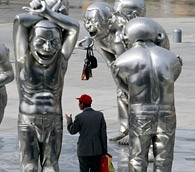
 A man walks through a group of works by Chinese artist Yue Minjun, one of which is carrying women's handbags, on display outside the Today Art Museum in central Beijing.
Tibetan Monks, In Nine-Part Harmony
by Julia Ross | 03.25.09 | 1:00 PM ET
Here’s a new way to express support for Tibet, if you’re so inclined: Pick up a copy of this CD, produced by the Grateful Dead’s Mickey Hart, of the Gyuto Monks Tantric Choir, chanting in multiple overtones at once (similar to the Tuvan throat singers). National Public Radio has a fascinating story about how the CD was produced, based on a rare 1960s recording of Tibetan monks in northern India made by religion scholar Huston Smith. NPR has a sample of Smith’s original recording online. Apparently the trained ear can discern up to nine harmonies sung by a single monk at one time; to me, the only word for it is “otherworldly.”
Proceeds from the CD support the New York-based Tibet House and the Tibetan Gyuto monastery-in-exile.
Quyang, China
by World Hum | 03.25.09 | 10:40 AM ET
 REUTERS/David Gray
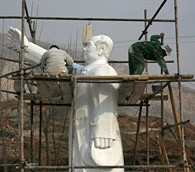
 Sculptors work as they stand on scaffolding surrounding a statue of the late Chinese chairman Mao Zedong in the town of Quyang.
Six Great Women Travelers in Asia
by Julia Ross | 03.20.09 | 10:57 AM ET
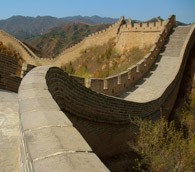
March is Women’s History Month, so this seems a good moment to call out a few of history’s great women travelers. Because so many 19th- and early 20th-century adventurers found themselves drawn to Asia, I’ve narrowed this list to women who made their mark on that continent, fording the Indus River or crossing the Tibetan Plateau, in defiance of social norms and often at great risk. These are the women I wish I’d been in another life. Herewith, my top-six list of the most intrepid Western female travelers to take Asia by foot, camel or donkey.
The Great Everest Clean-Up
by Joanna Kakissis | 03.18.09 | 12:13 PM ET
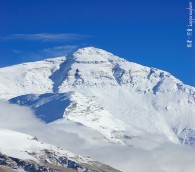
The climate-change watchdog group Eco Everest hauled off 2,100 pounds of trash and human waste from Mount Everest last year and is now paying visitors $1.00 per pound for waste removed from the mountain, according to Outside and Rock and Ice magazine.
The Nepalese have recently tried to prevent dumping by withholding a $4,000 trash deposit from climbers who leave rubbish on the 29,028-foot peak. But there still a lot of waste up there from previous expeditions—enough to inspire a documentary and an artist who recycles discarded oxygen bottles into eco-provocative bowls, bells and ornaments.
Hangzhou, China
by World Hum | 03.17.09 | 1:33 PM ET
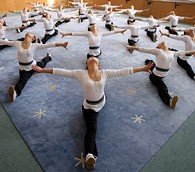 REUTERS/Steven Shi
 Students practice physical skills for Yueju opera at an art school in Hangzhou, Zhejiang province March.
What We Loved This Week: Twitter, Portland’s Cheap Eats, ‘Before Sunrise’ and More
by World Hum | 03.13.09 | 2:18 PM ET

Our contributors share a favorite travel-related experience from the past seven days:
Valerie Conners
Trip-planning via Twitter and the fabulous tweeps following @worldhum. I’m heading to Buenos Aires in April and have been posting questions out to our twitterverse of followers, looking for tips on sights, food, estancia tours and more—the response has been so warm and incredibly helpful. What an amazing resource. Some great ideas have crossed my path and are making their way into my itinerary.
Eva Holland
I watched one of my favorite travel movies, “Before Sunrise,” again for the first time in a couple of years and was thrilled to find that none of the crazy, spontaneous magic of Jesse and Celine’s one night in Vienna had worn off. Here’s a classic sequence:
This Week in Tibet: Bad News, Good News?
by Julia Ross | 03.13.09 | 12:33 PM ET
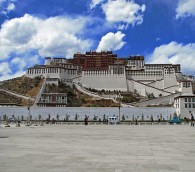
News out of Tibet this week has been bleak. Thousands of Chinese troops descended on the plateau in anticipation of protests marking the 50th anniversary of the Dalai Lama’s exile; the Dalai Lama charged the Chinese government with making Tibet a “hell on earth,” and foreign tourists have been banned from the area. Since Tibetan protests erupted in March 2008, tourism in the region has suffered a steep drop and doesn’t look to recover anytime soon.
Until political tensions ease, we’ll have to make do with this small piece of good news: China just announced new restrictions on construction and advertising near Lhasa’s Potala Palace in an apparent attempt to preserve the complex, a UNESCO World Heritage Site. UNESCO has criticized the growing number of shops and restaurants near the palace in recent years, many built to cater to domestic Chinese tourists.
So, why the announcement this week? China’s official news agency—in reply to the Dalai Lama—asserted that Tibet is in fact a “paradise on earth,” and paradise needs protecting, right?
Tiananmen Square, China
by World Hum | 03.12.09 | 11:41 AM ET
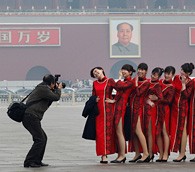 REUTERS/Reinhard Krause
 Hostesses pose for pictures on Tiananmen Square during the closing ceremony of the Chinese People's Political Consultative Conference (CPPCC) in Beijing.