
Destination: North America
R.I.P. Liberace Museum
by Eva Holland | 09.14.10 | 3:57 PM ET

The Vegas classic is closing its doors after more than 30 years—apparently, due to shrinking revenue, from both the museum itself and the Liberace music royalties that help support it. Over at Flyover America, Sophia Dembling laments:
What is the world coming to?
I’ve been to the Liberace Museum more times than I should probably admit. Three? Four? I’m not sure, but I’ve been dazzled every time. What’s more, even though I lived through the Liberace era, I didn’t know until I visited the museum how really huge Liberace was—he sold out the Hollywood Bowl, for Pete’s sake! (Or George’s sake. And if you don’t know what I mean, then you don’t know Liberace.)
The Liberace Foundation is hoping to reopen the museum someday. In the meantime, some traveling exhibits are in the works.
 Email to friend
 del.icio.us
 Digg
Digg Facebook
 Furl
Furl Ma.gnolia
 Mixx
Mixx Reddit
 StumbleUpon
 Yahoo! Buzz
Travel Morality Tales
by Tom Swick | 09.13.10 | 10:54 AM ET
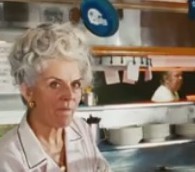 Screen shot from commercial for DIRECTV
 Parsing the hidden travel advice in two DirecTV commercials
World Travel Watch: Mudslides in Guatemala, Bombing in Cancun and More
by Larry Habegger | 09.08.10 | 1:41 PM ET

Larry Habegger rounds up global travel news
Interview with Michael Scott Moore: ‘Sweetness and Blood’
by Jim Benning | 09.08.10 | 12:32 PM ET

Jim Benning talks with the author of a new travel book about the spread of surfing around the globe
What We Loved This Week: Rachid Taha, Fall Colors at Alaska’s Denali Park and More
by World Hum | 09.03.10 | 3:49 PM ET
Jim Benning
Algerian musician Rachid Taha. I discovered him recently on a flight—he was a featured artist on Delta’s in-flight audio entertainment system. He has covered the Clash’s “Rock the Casbah.” Here’s a taste of something perhaps slightly less familiar:
Political Pundits Tackle American Vacation Time
by Eva Holland | 09.03.10 | 10:28 AM ET
‘Tis the season for lots of vacation talk, and so the Capitol Hill crowd turned its attention to shrinking vacation syndrome this week: First, a British columnist speculated that Americans “find it hard to relax” because of their Puritan heritage. Washington Post columnist Ezra Klein responded:
I’d say it’s more closely related to the fact that it’s hard to pass social welfare legislation in the American political system, and thus America is the only industrialized country that doesn’t guarantee its workers some amount of paid-vacation leave.
NRO’s Reihan Salam followed up with a mild defense of the American system. (Via The Daily Dish)
World Travel Watch: Plague in Bolivia and Peru, Warnings in Northern Ireland and More
by Larry Habegger | 09.02.10 | 12:09 PM ET
Larry Habegger rounds up global travel news
Jonathan Gold and Rick Bayless Tweet Off Over Mexican Food in L.A.
by Jim Benning | 08.31.10 | 11:49 AM ET
What was it? A battle? A shot over the bow? Maybe, looking back, it was just a misfire. But it got L.A. Mexican foodies pretty excited for a few days.
At a talk in Orange County last week, Pulitzer Prize-winning restaurant critic Jonathan Gold—a hero of ours who has made a career of championing great hole-in-the-wall ethnic restaurants in SoCal—took a shot at PBS TV host and restaurateur Rick Bayless. The chef, whose Frontera Grill in Chicago gets rave reviews, just designed the menu for a new upscale Mexican restaurant in Los Angeles, Red O—his first project in the region.
Now, L.A. loves its homegrown Mexican food. It’s a source of pride. So the arrival of Bayless earlier this year was bound to raise eyebrows.
The Los Angeles Times gave Red O a favorable review. Then Gold took the mic at a gathering of journalists last week.
Gold said Bayless was a “good” chef who knew his way around Mexican recipes, but he sneered at Bayless’ nerve in coming to Los Angeles and opening a restaurant—Red O—that presumed to introduce Angelinos to “authentic” Mexican cuisine. In particular, Gold zeroed in on Bayless’ inclusion of chilpachole—a glorious seafood soup from Veracruz—as some rarity, when Gold said the soup was easily available in the Southland, along with dozens of other Mexican regional specialties.
Word reached Bayless, and he tweeted:
@thejgold Thought a Pulitzer meant you checked facts. Sneering at me for something I never said is either mean or sloppy. I’m offended
He also posted this comment on the OC Weekly’s article:
I know it’s all the rage for journalists to go into unsupported hyperbole, but I never said I was going to introduce Southern California to “authentic” Mexican cuisine. I said I was going to bring the flavors of Frontera Grill to Los Angeles.
Ouch.
As of today, however, both sides are tweeting that the spat is behind them.
Gold’s tweet:
@Rick_Bayless and I have kissed and made up, I think. Further thoughts will have to wait for the full review.
Bayless’ reply:
Yes, i think we have :) RT @thejgold @Rick_Bayless & I have kissed & made up, I think. Further thoughts will have to wait 4 the full review.
Taco détente.
Whew. Now we can all go back to eating our enchiladas in peace.
Cruise Passengers Rescued from Northwest Passage
by Eva Holland | 08.30.10 | 10:57 AM ET
The Canadian Coast Guard removed 110 passengers from a cruise ship stranded in the Arctic Ocean this weekend. The ship was exploring the Northwest Passage when it got hung up on an unmapped rock—presumably, we’ll see more of these incidents as the passage becomes increasingly viable, so Canada, keep your icebreakers sharp.
From Paris to New York—in 1906
by Eva Holland | 08.27.10 | 9:26 AM ET
Conor Friedersdorf digs up an old gem from the Atlantic’s archives: a dispatch from a native New Yorker, returning to the city after an extended stay in Paris. It’s a must-read for NYC-philes. Here’s a taste:
In a word, this returned New Yorker finds few familiar landmarks; and the few he does find seem to have lost most of their original meaning. He is as much dazed and puzzled by his surroundings as Rip Van Winkle after his twenty years’ sleep. Nobody resides, does business, dines, or drinks in the same places as before. Nobody frequents the same pleasure resorts. Nobody saunters along the same walks. It is not safe for him to make a business or social call, or to set out for a restaurant, a chop-house, a theatre, or a club, without consulting the Directory in advance; and, even so, he risks having his trouble for his pains, inasmuch as there is more than a chance that a move has been made since the Directory was issued.
After he so far recovers from the shock of his initial disenchantment, however, as to be able to take note of details, he finds that there is some balm in Gilead, after all. At the end of a month he begins to catch the spirit of New York; and at the end of six months he has come completely under its spell, and loves it, as Montaigne loved the Paris of his day, “with all its moles and warts.” The radiant white city by the Seine still appears to him at intervals, like the memory of a favorite picture or poem; but it has lost the power to disquiet him with desire. Paris is no longer a perpetual obsession,—the absolute norm by which he judges everything he sees. Indeed, it has passed so far out of his life that he is in danger of being as over-lenient in his judgments as he was at the outset over-severe.
Nine Great Stories About New Orleans
by World Hum | 08.26.10 | 10:32 AM ET
 Photo by Wayne Curtis
 To mark the fifth anniversary of Hurricane Katrina, we've collected stories from our archives that explore the city's heartbreak, passion and rebirth
Ohio: The Bedbug State?
by Eva Holland | 08.25.10 | 3:09 PM ET
With bedbug infestations apparently on the rise across the country, the Daily Beast has put together a list of the top ten buggiest cities in America—and burgs in Ohio landed in the first, second and eighth spots. If you’re headed to Cincinnati, Columbus, Dayton, or any of the other cities on the list, you may want to put this retro travel technique to use.
Life on I-95: ‘The Road Most Traveled’
by Michael Yessis | 08.25.10 | 10:00 AM ET
NPR’s Weekend Edition launched an ambitious series Saturday, a three-weekend-long look at the most trafficked interstate in the U.S. It’s not this trafficked, but it’s pretty busy. And it plays a huge role in American life:
All along the Eastern Seaboard, Interstate 95 has helped shape the daily lives and vacation dreams of the roughly 100 million people who reside alongside it. They live in dense cities and rural counties in the 15 states through which I-95 passes on its nearly 2,000-mile, north-south path.
The Department of Transportation says that each year I-95 gets more VMTs—that’s vehicle miles traveled—than any other road. The traffic on I-95 peaks in August as legions of vacationers and college students join commuters, truckers, migrant farm workers and others on the road.
As an accompaniment, NPR recommends 95 songs for driving on I-95.
The All Coast U.S.A. Map
by Michael Yessis | 08.25.10 | 8:21 AM ET
Craig Robinson’s all coast map of the U.S. eliminates the borders with Mexico and Canada. The country looks a bit like a turkey leg. Clever and disorienting.
Spike Lee and the ‘Bipolar Parlance of Life’ in New Orleans
by Eva Holland | 08.24.10 | 5:24 PM ET
Spike Lee’s new documentary, If God is Willing and da Creek Don’t Rise, is airing on HBO this week. It’s a follow-up to his award-winning 2006 Katrina documentary, “When the Levees Broke,” and Salon’s Billy Sothern, a NOLA resident, says it nails the voice of the city. Money quote:
The people telling the story in this documentary are many of the same people whose names appear in the paper. Some are policy wonks; others, activists or artists; but nearly all are fervent New Orleanians. Some of them speak in a strongly held hyperbole that hints at madness or mania, both about the good and the bad here. There are angry words, never precisely defined, about “the powers that be” and their efforts at “ethnic cleansing” on the one hand, and on the other, references to the Saints’ Super Bowl win that suggest a local belief that the victory was an act of God, as if New Orleans, like the long-suffering Job, had been rewarded for its faith. This is the bipolar parlance of life here, stemming from the widely held belief that the city is vastly better than, worse than, and not really a part of the rest of the country.
(Via The Atlantic)