
Travel Blog
Morning Links: Stilwell Road, the Delta Queen and More
by Michael Yessis | 01.05.09 | 8:14 AM ET
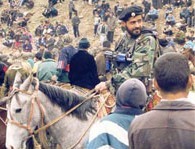 Photo by David Raterman
 - The amazing story of Stilwell Road— written by an anonymous Los Angeles Times writer.
- Robert Reid offers some suggestions for helping struggling travelers’ destinations. Among them: An alphabet throwing contest in Rila, Bulgaria.
- Passengers “run amok” on flight from England to Cuba.
- Christopher Elliott finds seven videos the airlines don’t want you to see.
- Gawker compiles video from a month of cruise ship disasters.
- P. J. O’Rourke on Disney’s “Innoventions Dream Home,” aka the House of the Future II.
- The Delta Queen: A new endangered historic site?
- Student abroad and accused murderer Amanda Knox was voted woman of the year in an Italian poll. Her trial begins later this month.
- The Cranky Flier remembers the airlines we lost in 2008.
- The New York Times discovers buzkashi in Afghanistan. We covered it in Tajikistan in 2002 and spelled it buskaschee. What is buzkashi/buskaschee? Goat-carcass polo.
Got a suggestion? .(JavaScript must be enabled to view this email address) your link.
 Email to friend
 del.icio.us
 Digg
Digg Facebook
 Furl
Furl Ma.gnolia
 Mixx
Mixx Reddit
 StumbleUpon
 Yahoo! Buzz
World Hum’s Most Read: Dec. 27-Jan. 2
by World Hum | 01.02.09 | 2:51 PM ET
Our five most popular features for the week:
1) Subcontinental Homesick Blues (pictured)
2) What Every Traveler Should Know About Disposable Underwear
3) ‘EIMI: A Journey Through Soviet Russia’
4) Plato Was a Backpacker
5) World Hum’s Top 40 Travel Songs of All Time
The Myth of the Carbon-Neutral Air Traveler?
by Joanna Kakissis | 01.02.09 | 2:27 PM ET

By 2025, air travel could hurl nearly 1.5 billion tons of carbon annually into the environment—about a half of what the 457 million people at the 27-nation European Union currently emit. If you care about the environment, this is a terrible trend to ponder on an international flight.
I’m in Athens, Greece, now spending the holidays with my family but my flight from Denver, Colorado, did its small part to pollute the earth, producing some 5,243 lbs of CO2, according to the TerraPass carbon footprint calculator. I felt bad, to some extent, but air travel is the most efficient way to visit people and places when we’re on tight schedules. (And there are many other things we can do to be better eco-travelers until the day all planes can run on biofuel, but that’s another blog post altogether.)
Some airlines already offer travelers opportunities to buy offsets that would help pay for carbon-reducing projects or programs (and perhaps reduce their eco-guilt). And San Francisco International Airport is set to become the nation’s (and perhaps the world’s) first airport with self-service kiosks where travelers can swipe their credit cards to buy carbon offset credits.
Lisa Ling: Globetrotting Journalist, ‘Thinking Man’s Sex Symbol’
by Eva Holland | 01.02.09 | 1:18 PM ET
‘Gilligan’s Island’: Castaways Hitting the Big Screen?
by Eva Holland | 01.02.09 | 12:43 PM ET
Just when you thought there were enough travel movie remakes and adaptations in the pipeline, Hollywood has found one more old storyline to re-work.
The New York Daily News is reporting that a movie version of the desert island sitcom classic Gilligan’s Island is in the works. Michael Cera of “Juno” and “Arrested Development” fame has agreed to play the bumbling title character, and producers are reportedly chasing singer Beyonce Knowles for the role of Ginger. There’s no set start date for the project.
(Via The Remote Island)
Morning Links: Warrior Monks, Sustainable Fuel, ‘The Big Belch’ and More
by Valerie Conners | 01.02.09 | 10:02 AM ET
The (Official) End of ‘Staycation’?
by Jim Benning | 12.31.08 | 11:07 AM ET
On a warm Southern California afternoon near the end of the summer travel season, I bade farewell to the word “staycation.” It wasn’t a fond farewell, and I’m happy to report that others followed suit.
Now, at year’s end, comes a last bit of good news on the topic. Lake Superior State University just released its annual List of Words to Be Banished from the Queen’s English for Mis-use, Over-use and General Uselessness. From 5,000 nominated words, the university chose 15 for banishment, including “staycation.”
Thank you, Lake Superior State.
Though she may take some time off at home, the queen would never take a staycation. Neither should the rest of us.
Call it a New Year’s resolution.
R.I.P. 2008: From Philip Agee to Papa Wendo
by Jim Benning | 12.31.08 | 10:09 AM ET
We said goodbye to great writers, adventurers, musicians and others in 2008—all people who, as we see it, had an impact on the world of travel.
R.I.P.:
- Philip Agee, CIA agent and Cuba travel activist
- Bud Browne, surf filmmaker
- Cachao, musician
- George Carlin, comedian
- Michael Crichton, writer
- Elmer Dills, writer and critic
- Steve Fossett, adventurer
- Dave Freeman, writer
- Sir Edmund Hillary, climber and philanthropist
- Tony Hillerman, writer
- Samuel Huntington, writer and political scientist
- Miles Kington, linguist
- Don LaFontiane, voice-over artist
- Maharishi Mahesh Yogi, guru
- Richard Marks, activist
- Paul Newman, actor
- Herb Peterson, inventor
- Sydney Pollack, filmmaker
- Dith Pran, photographer
- Diana Barnato Walker, aviator
- David Foster Wallace, writer
- Papa Wendo, musician
R.I.P. Samuel Huntington
by Jim Benning | 12.30.08 | 1:43 PM ET
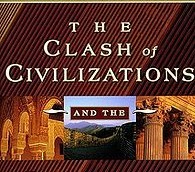
The author of The Clash of Civilizations and the Remaking of World Order and other influential books has died at the age of 81.
I read “The Clash of Civilizations” while traveling in Asia in early 2001 and found Huntington’s theories about culture and the world fascinating, even if I didn’t always agree with them. (The book was based on this article.) I always thought the book should be essential reading for any traveler with even a slightly wonkish bent trying to make sense of the world.
In retrospect, early 2001 was an interesting time to be reading the book. As the New York Times obituary points out, Huntington was startling prescient, writing: “Somewhere in the Middle East, a half-dozen young men could well be dressed in jeans, drinking Coke, listening to rap, and between their bows to Mecca, putting together a bomb to blow up an American airliner.”
Other writers, like Benjamin Barber in Jihad vs. McWorld, have offered what I thought were compelling counter-arguments to Huntington’s theory, suggesting that it’s not so much a clash of civilizations but other factors behind many of today’s terrorist attacks. The two books could well be read together.
Huntington wrote many books, including, more recently, a controversial volume about American culture and immigration. It angered many.
Regardless, he was a thoughtful writer and an important thinker. Many readers—including travelers—will miss him and his contributions to political science and our understanding of the world.
As Eco-Tourism Grows, Struggle for Cultural Identity Remains
by Joanna Kakissis | 12.30.08 | 1:08 PM ET

In places heavy with history and natural beauty, eco-tourism often comes deeply infused with nostalgia. Consider the 300-year-old Aspros Potamos cottages in eastern Crete, where goatherds once spent wintry nights as their flocks grazed along the mountain gorge. An Athenian journalist rescued the cottages from dilapidation in 1985 and turned them into simple, solar-powered lodges for those who want to commune with nature and a disappearing culture.
This time of year, you may find young Greeks on winter holiday there, gathered around a communal campfire and singing their grandparents’ favorite folk songs. It’s as much an appreciation of Crete’s fragile natural beauty as an exercise in identity.
Rock Bands Go CouchSurfing: ‘It Beats Sleeping in a Van’
by Eva Holland | 12.30.08 | 12:15 PM ET

It also beats “staying with crazy fans”—and, of course, paying for a motel room every night. So says Spin Magazine in a brief story on the latest CouchSurfing phenomenon: touring bands using the popular nonprofit travel site to line up post-gig digs.
According to Spin, more than 900 bands have joined the site. “We’ve never had any bad couchsurfing.com stays,” said the lead singer of The Shackeltons. “Everyone was so welcoming, and their places were nice and clean.”
Morning Links: India Security, Peruvian Shamans, Las Vegas and More
by Jim Benning | 12.30.08 | 11:08 AM ET
- Is India safe for travelers? Depends who you ask.
- The Japanese man who mysteriously moved into Mexico City’s airport four months ago and became a celebrity of sorts up and left on Sunday. Go figure.
- Peruvian shamans held a ceremony to “protect the spirits” of Barack Obama and other leaders in 2009.
- Family members of the woman who disappeared off a cruise ship near Cancun say they believe she jumped, citing “previous emotional issues.”
- The Washington Post reviews “Bad Traffic, “a new novel from Welsh writer Simon Lewis, who “first gained attention as a travel writer.”
- Which helps impoverished people in developing countries more, cell phones or laptops? Good magazine debates the question. (Via Ideas Blog)
- In October, the last month for which numbers are available, gambling revenue in Las Vegas was down “an ominous 24.3% vs. the same month in 2007.” And that’s just the beginning. But hey, it’s nearly New Year’s Eve, so get out there and help the struggling city: Double down on 17.
Eating Like a Viking in Minneapolis
by David Farley | 12.29.08 | 6:45 PM ET

The first indication I knew I was in trouble was when the waitress told me I was the youngest person to order the dish since they put it on the menu a month ago. And I’m 37. The second—and the worst part—occurred when the dish actually arrived. Staring at me from a plus-sized plate was a variation on the theme of pale: diced boiled potatoes, golf ball-sized pearl onions, lefse (a flatbread not unlike lavash or tortilla), a thimble of butter, and, the plate’s tour de force, a three-inch quivering gelatinous beast. Otherwise known as lutefisk.
Cuban Exiles Recall Flights to U.S.
by Julia Ross | 12.29.08 | 3:32 PM ET
For the 265,000 Cubans who fled their homeland on U.S.-sponsored “Freedom Flights” from 1965 to 1973, the emotional 45-minute flight to a new life remains etched in memory. Now, a Miami Herald series on the 50th anniversary of the Cuban revolution has given Cuban-Americans a chance to share photos and memories of their “Freedom Flight” experience, in conjunction with a database that makes names and arrival dates of refugees available to the public for the first time.
In reading through the online recollections submitted by exiles who were children at the time, I was struck by how many remember their first taste of the U.S.—a coke, a ham sandwich, a pack of Wrigley’s gum, many handed out in box lunches at Miami’s airport. Others recall the tense days leading up to their departure, and the clothes, jewelry, and dolls left behind.
With the recent publication of Rachel Kushner’s novel, Telex from Cuba, and Tom Gjelten’s Bacardi and the Long Fight for Cuba: The Biography of a Cause, along with the much-anticipated release of Steven Soderbergh’s Che next month, it seems Cuban history remains a hot topic in the U.S. Kudos to the Herald for rounding out that history with an important public record.
Stockholm and San Francisco: Two Capitals of Eco-Cool?
by Joanna Kakissis | 12.29.08 | 1:23 PM ET

Stockholm has organic jeans, eco-guidebooks and Michelin-starred chefs specializing in natural cuisine. San Francisco has eco-boutiques, enviro-warriors and dating sites for “eco-sexuals.”
The no-bad-news folks at The Optimist lavished praise on Stockholm, which has been shortlisted as a European green capital for 2010 and 2011 and even has its own eco-focused blog. The pub calls the city “eco-cool.”
Meanwhile, a Qantas blogger obsessed with the evils of plastic bags gave some love to plastic-bag-banning San Francisco.
I don’t know exactly what eco-cool means. If we’re talking style and sustainability, then I’d also give a shout out to Amsterdam, Reykjavik, Vancouver, Sydney, Copenhagen, Portland, Oregon and Boulder, Colorado.
Who would you nominate?
